
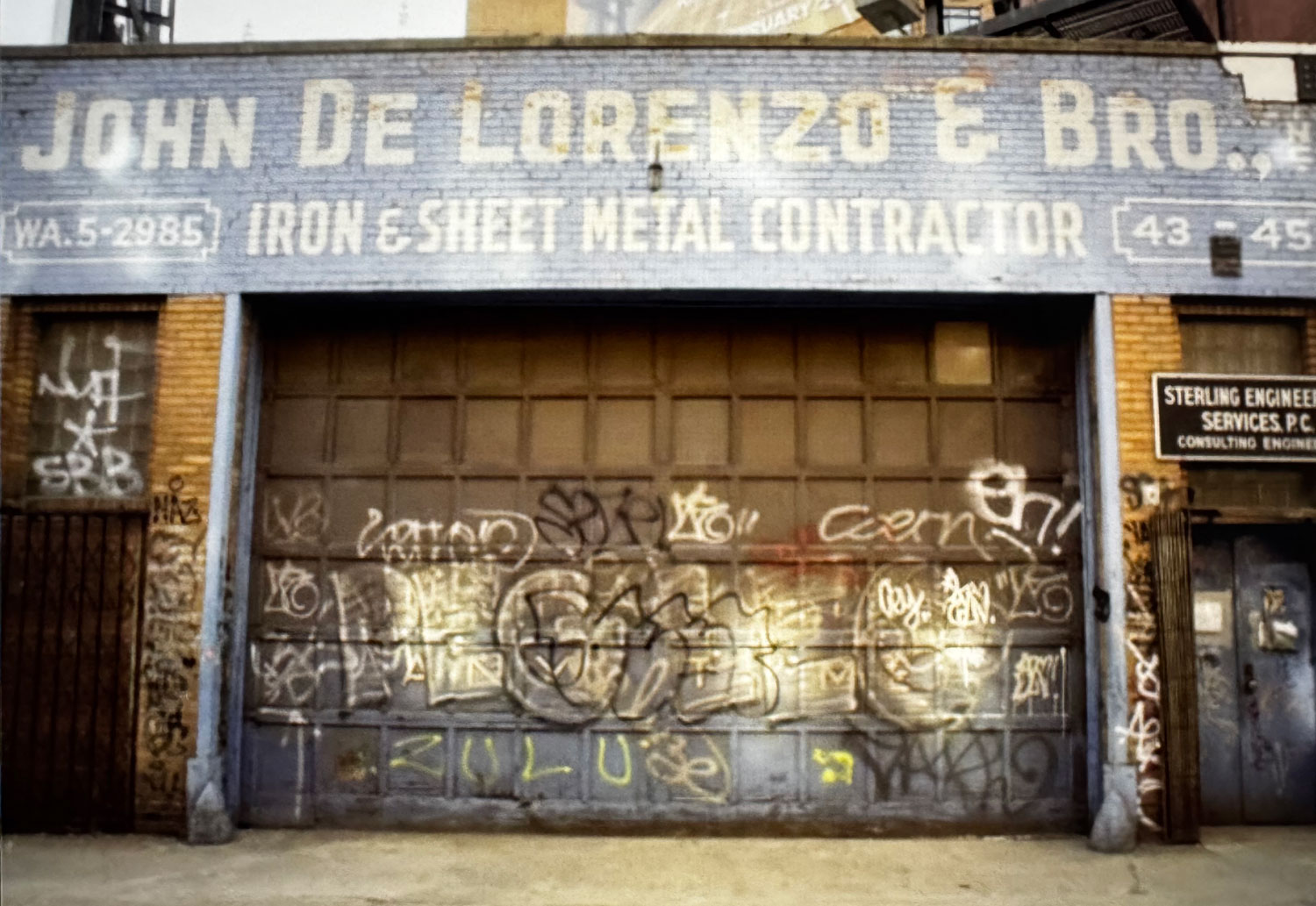
In these pages, I’ve collected countless firsthand stories from a wide range of stakeholders about the creative community that formed south of Houston Street as industry waned in New York City. But what about the waning industry itself? Who were the folks that overlapped and coexisted with artists in the early days before SoHo completely de-industrialized?
To find out, I spoke with Merel Fisher and Tom De Lorenzo, whose families made their living in industrial “SoHo,” beginning at the turn of the last century.
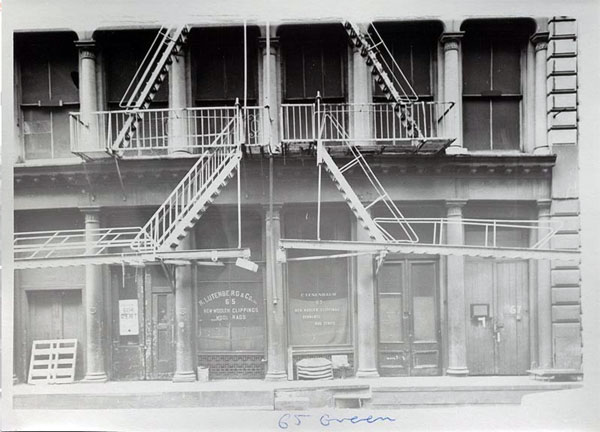
Merel Fisher’s family goes back four generations in SoHo. Harry J. Miller, Merel’s great-grandfather, came to the United States in the late-1800s from Austria as a young boy. He started Merel Wiping Material, his textile company, around 1900, named after his wife Merel (Miller), after whom Merel (Fisher) is named. Early on, after their original building on Mercer Street burned to the ground, they relocated to 67 Greene Street, where they remained.
Merel and her family lived in Brooklyn, but they spent most of their waking hours in what would be later named SoHo. She recalls her childhood:
As a kid [in the early 1960s], I ran through the cobblestone streets, playing outside while my parents worked. Sometimes I would run real fast, especially if a rat was chasing me. I was the kid in blue overalls with a red bandana hanging out of my back pocket.
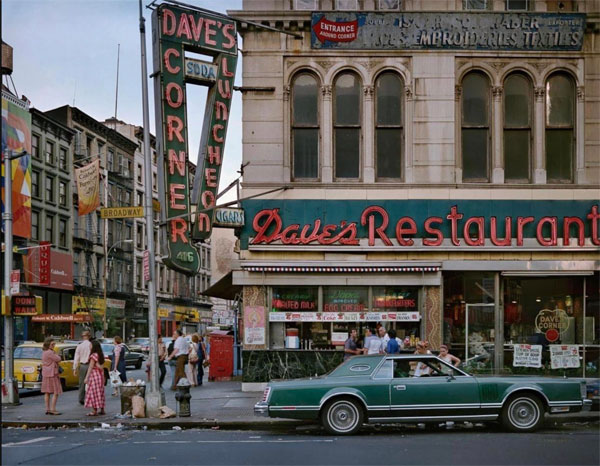
Fast forward to 1967, when Merel’s grandfather dies: Merel’s parents, who also worked at the company, break off and purchase their own textile company called Atlas Cleaning Cloth:
My parents took over [Atlas’] lease at 276 Canal Street above Dave’s Corner. We loved their egg creams and snacks. The building only had DC current and was a cold water flat. We would go dumpster diving for cardboard to make our bales of cloth.
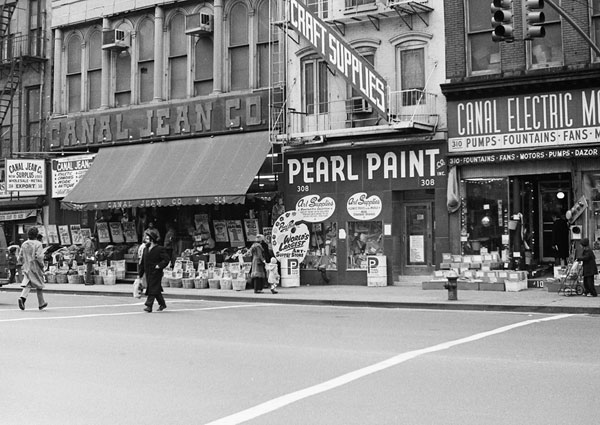
In the 1970s, the business moved to the third floor of 10 Greene Street:
It was much bigger than our previous loft and we were so happy there. By then, things in SoHo were changing. Art galleries were opening and restaurants and other businesses began springing up around town. The Canal Jean Company was on Canal Street and Pearl Paint was busy supplying all the local artists. Dean and Deluca, organic grocers, and vintage clothing stores began to move in. Artists were now occupying a good portion of the neighborhood and they came to our loft for muslin and cheesecloth. We attended art shows when we were invited. And we dined frequently at the Spring Street Bar and 468 West Broadway [also called Mama Sitka]. We enjoyed getting our daily bread at Vesuvio Bakery. Our next door neighbors, Joel and his wife and kids, ran a flea market on weekends in the parking lot across the street.
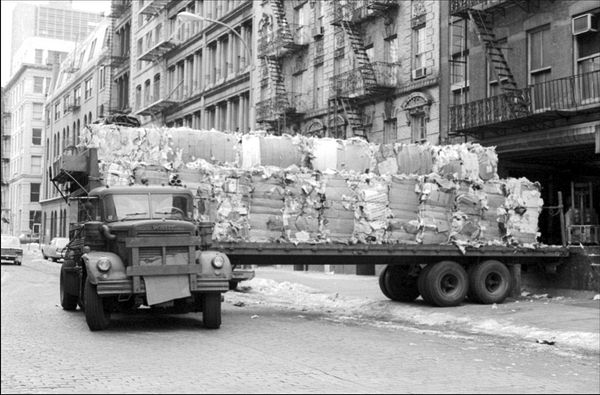
Atlas Cleaning Cloth recycled used cotton fabrics by turning them into cleaning cloths. This was referred to as the “rag trade,” which involved collecting and sorting fabric scraps for reuse:
Once linens, uniforms, and other items made from cotton were stained or rendered useless, they were sold to jobbers like us. In SoHo, most of the rag companies were middlemen. We processed the raw rag product into something more useful and more expensive to be used for wiping cloth. Local silkscreeners, printers, furniture makers, and other artisans needed clean absorbable cotton wipers for their machinery, staining, painting processes, and other uses.
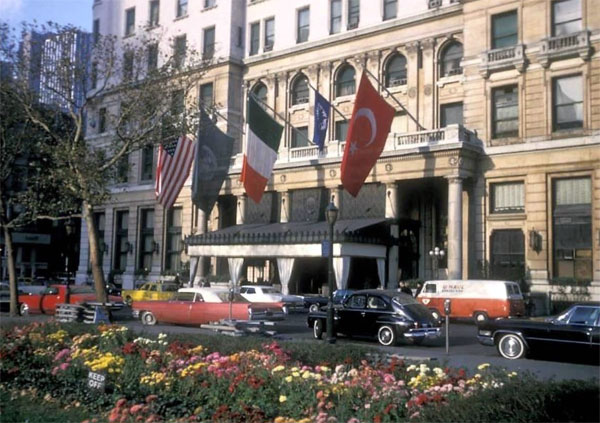
Atlas had many suppliers, but one very high profile one:
We had a contract with the Plaza Hotel. Sometimes monthly, and more often quarterly, my dad and brother would rent a huge Hertz truck and back it up to the Plaza loading dock at 4 AM, drinking coffee and waiting to load those huge grey laundry baskets on wheels containing tossed out sheets, pillowcase, towels, bath mats, blankets, uniforms (with gorgeous gold buttons), aprons, and all things textile that were deemed unworthy of use for the hotel’s clientele and workers. … I grew up sleeping on plaza bedding. All my towels and mats, etc. were marked by the double reversed PP of the Plaza Hotel, so I guess I was a real life Eloise!
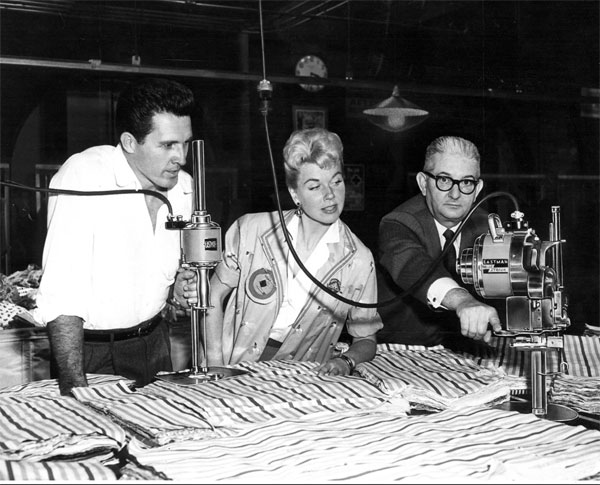
Merel describes the process of making wiping cloths:
When we received the bales, they were brought onto the “floor” and broken down by workers. They were then sorted, with much of it thrown out as garbage. The lighter weight fabrics that were cotton were cut up for rags. Whites separate from colors, red thrown away. Uniforms had their buttons, collar, and cuffs removed and were also cut for rags if they were not too heavy. Buttons were saved in coffee containers until there were thousands of them, they were then sold to button companies. In our business, after we cut the fabric to hand wipe size, we then laid them flat on a long work table in the center of the loft and neatly folded them into bundles. Sold by the pound, we put them into 50 pound boxes and delivered them throughout the city and tri-state area. We used parcel post through the post office for smaller bundles, wrapped in plain brown paper and tied with string. I went to the post office every day. Often more than once.
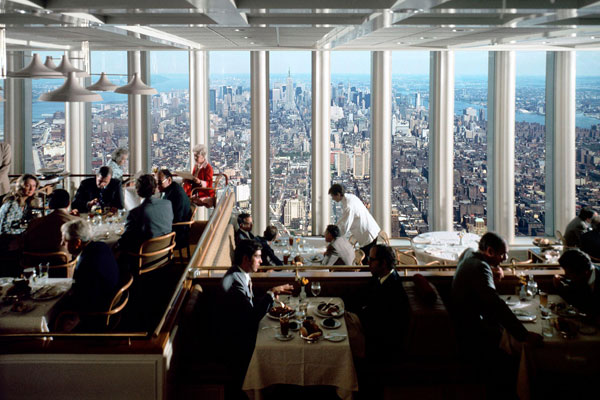
We also serviced restaurants, like Windows on the World in the World Trade Center. My dad and I would personally deliver their cheesecloth, which they used in the kitchen. We loved to take the elevator to the top of the trade center and look at the views.
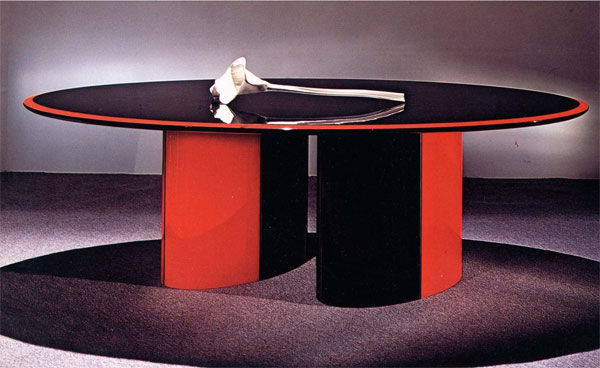
Atlas also served as the middleman for wholesale cotton fabrics, such as cheesecloth and muslin:
As for the artists, just past the work tables, and right behind the baling press, was an area of our loft that housed the higher-end cloths: cheesecloth, muslin, sail cloth, and broad cloth, all differentiated by their weight, weave, and uses. The cotton mills in the South would weave the cloth to our specifications and deliver them by the truckload a few times a year. These specialty items are what brought the artists to our loft.
But it was the wine and cheese that they stayed for. The artists tended to start their day later and so we had the whole workday for the rag business, and around 4 PM when our workers went home (primarily political refugees from El Salvador), we would make up a cheeseboard with fresh fruit and crackers. Occasionally the artists would show up with something to add to our Happy Hour (pun intended, my dad was known as “Happy”), and we would drink and eat and talk. They always paid in cash, which was our dinner fund. And once we packed up their product and sent them on their way, it was time for dinner at one of the neighborhood restaurants. We liked to wait for rush hour to be over before our drive home to Brooklyn.
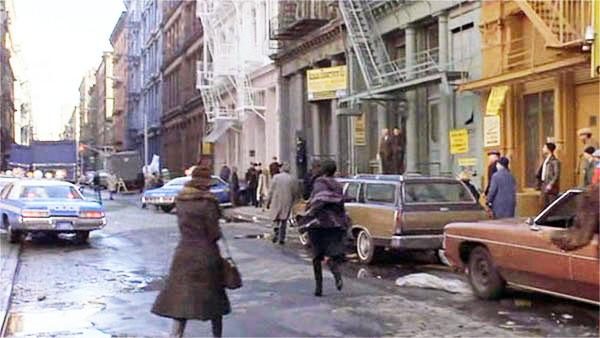
Atlas’ had its fifteen minutes of fame:
One day Hollywood came knocking on our door, literally. They were making The Eyes of Laura Mars right on Greene Street. They wanted to use our loading dock in one of the scenes, and they asked the workers to stand on the dock. Eddie and my Uncle Al made it into one of the scenes.
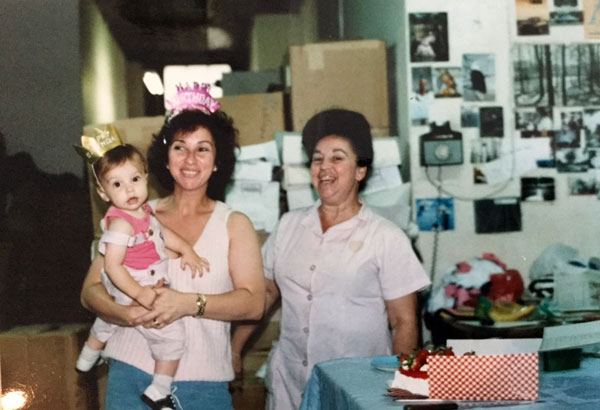
Merel had only positive things to say about SoHo’s transition to an artists’ community. I thought there might be some resentment over companies such as theirs being displaced, but it seems Atlas had run its course around the time when Merel’s mother, who was still running the business in 1998, retired. This was long after Merel herself had left the company to follow an alternate career path. On the contrary, Merel told me her parents were bohemians and free spirits and had loved being connected to a community of artists who were also their customers.
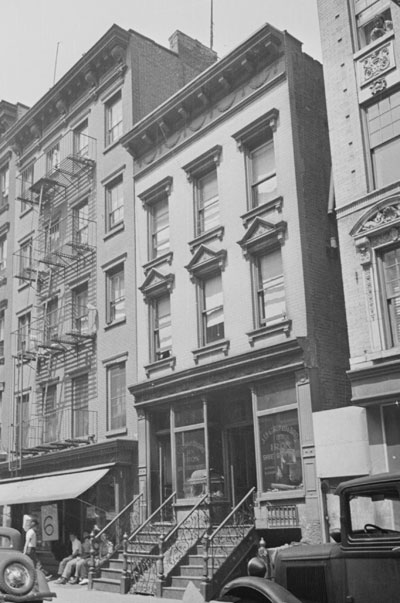
I found this was also the case with Tom De Lorenzo, whose family came to the United States in 1903 and started what would become John De Lorenzo & Bro., an ironworks business. Their shop, located at 113 Thompson Street did roofing, stairs, railings, and skylights, among other jobs.
Tom’s grandfather joined the business around 1918. Tom’s father, Tom Sr., followed suit in 1946 after serving in the Navy during WW II, and then Tom Jr., working summers starting 1961, and then full time in 1976.
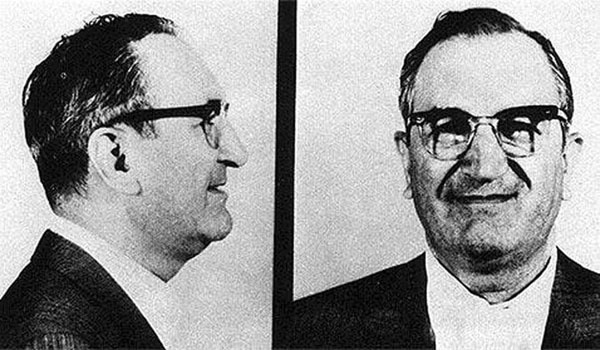
In addition to running a business, the De Lorenzos had to contend with organized crime:
The mafia was big in the area. Joe Bananas, he ran everything. He had the Merchants Society [back when we were on Thompson Street]. They’d come around and you’d pay him to protect your property. …Paid him so much a month and somebody would actually come around and put a card in your window so that nobody touched the property.
Then when we were on Grand Street, they used to come out once a year. Said they’re going to put out a yearbook. We’d take out an ad in the yearbook. There was never a yearbook.
The plumber next door, when he moved in they went to him for an ad and I guess he said, no, I don’t want to take out an ad. So they brought [the plumber] to us and they said, you should tell him to take out an ad. And I said, you know what, you should take out an ad. That’s what it was like in the fifties, sixties.
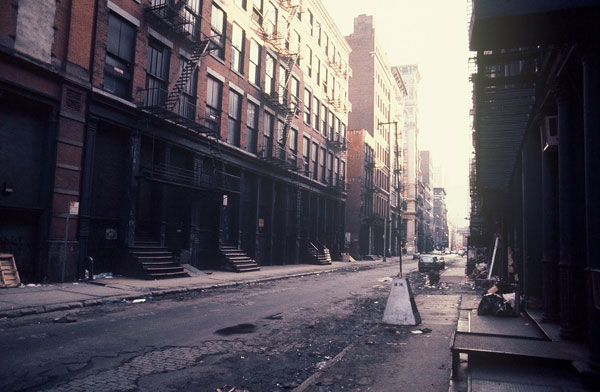
I asked Tom what changes he saw in SoHo after he started working there in 1961:
The first big change was that businesses started moving out. The streets were too narrow for big trucks. To the load the trucks, you had to go up an elevator, come down an elevator. This wasted too much time. The businesses all started moving to the suburbs, where they had more space. Before, you could get anything you wanted in the SoHo area. Anything you needed, you could get there. I remember there was the candy factory, there was the doll factory, …there was the boiler company. There was everything. Then it slowly just disappeared.
And by the early seventies, it was a ghost town. That’s when the artists started moving in and it was perfect for them because they got a whole floor [of a loft building] and they could live there and work there. They had plenty of room. They fixed up the spaces. In some cases they had to add a toilet and a sink. Then they put in bathtubs or showers and kitchens. With their own sweat equity they made it livable.
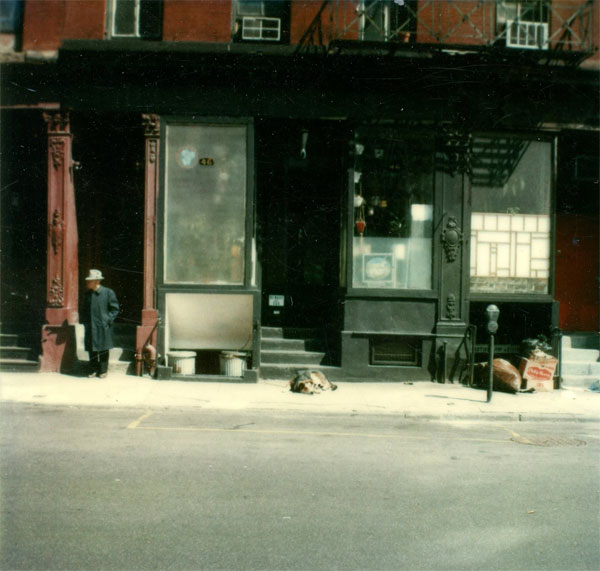
By 1976, when Tom joined his father in the business full time, there were quite a few artists living in SoHo. I asked Tom how he felt about co-existing with these newcomers:
We were happy about it because it drove up the real estate value, and once again it was a great neighborhood to be in. Before, it was bad. Especially on the block of Grand Street, there were no lights and no businesses. It was deserted at night. Weekends you wouldn’t go into the area. When we would come in Monday morning, there were little crack vials we needed to sweep up. And our door was just total graffiti. So when the artists came and made it nice, we were much happier.
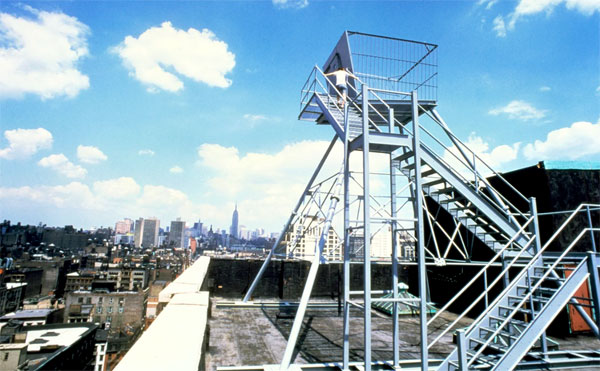
I asked Tom if his business changed as the neighborhood changed:
Our business changed from supplying all the other businesses in the area, to working for the artists. Plus we were kind of unique because we were the only ones left in Manhattan that had an iron shop. It is a big garage building, most of the year, the garage door was open. People would walk in off the streets asking can you fix this pot or bicycle? We had good relationships. We’d take UPS deliveries for the people across the street in the walkup apartments, and when they came home in the evening, they would pick up the deliveries from us. So we had a good rapport and many friends in the neighborhood.
It turns out that Tom and his father did a ton of art fabrication, in addition to making skylights and staircases. They worked with Owen Morel, Francis Hines, Alice Aycock, and Arturo di Modica of the Wall Street Bull fame, just to name a few.
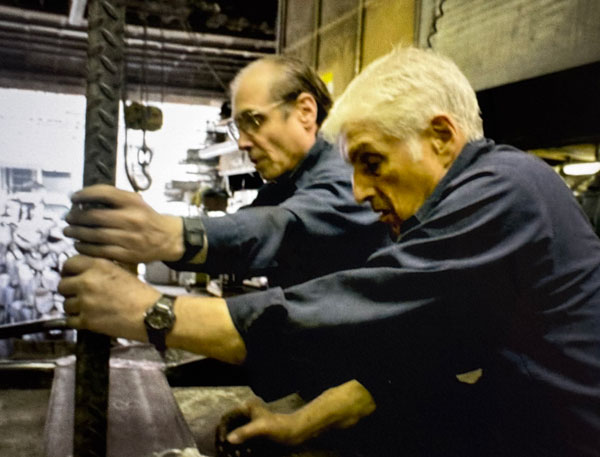
Eventually, however, it became clear that it was time to close up shop:
My father was getting older. I was getting older. And the men, all my guys were getting older. And getting new work was getting harder, and the city was just making it harder and harder to do any work.
In fact, now we couldn’t work there even if we wanted to because our steel deliveries were made by big trucks, and they’d have to swing around and back in. But now there are bike lanes and cars parked on the outside of the bike lanes. A truck could never back into the shop. It would be impossible. Towards the end of the 2000s, we were the only guys left in Manhattan, so suppliers did not want to come into Manhattan to only deliver to us. In addition, every time you turned around, a traffic agent would ticket the trucks, it really made it hard.
In the seventies, eighties, even the nineties, if you had a truck with commercial plates, the City didn’t bother you. You were doing work. But when Bloomberg came in everything was a violation.
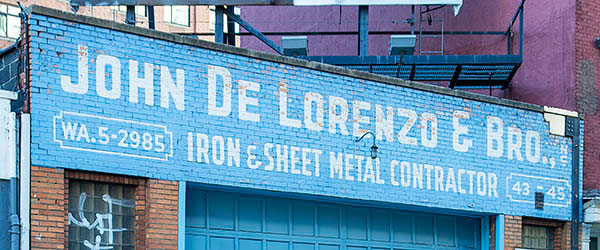
John De Lorenzo & Bro. closed in 2008, a century after it was founded. During the life of the company, New York, SoHo, and the De Lorenzos saw so many changes. Theirs was one of the businesses that remained in SoHo during the neighborhood’s transition away from industry, partly because its products and services were adaptable and therefore evergreen, and partly because it, like Atlas Cleaning Cloth, found customers within the burgeoning artists’ community.
Nevertheless, after the in-between time, there comes a time when gentrification makes things unsustainable for the OGs. The changing of the guard is always, at best, bittersweet.
Looking back, SoHo was a great place to come of age for Merel:
Shout out to Harriet Love, where I bought clothes, Pearl Paint, Canal Jean, Dean and Deluca, Broadway Panhandler, where we bought housewares. Broome Street Bar, Prince Street Bar, 468 W. Broadway, Vesuvios, Dave’s Corner, the Chinese Movie theatre!
And a shout out of sorts from Tom as well:
I am living a very comfortable life because of my father, grandfather, and SoHo. I want to thank you and your fellow artists for making SoHo, SoHo.
This is a beautiful sentiment, but, honestly, who should be thanking whom?